English
 India is preparing for one of the most significant updates to commercial vehicle safety in its history. The Ministry of Road Transport and Highways (MoRTH) has announced that from 1st April 2026, any newly introduced models of passenger vehicles with more than eight seats, buses and trucks must be equipped with a defined package of Advanced Driver Assistance Systems (ADAS). This mandate will also become applicable to current production models from 1st October 2026.

This is undeniably a major step towards improved road safety in the region. Estimates suggest that there were 168,000 deaths in India in 2022 due to road crashes, with up to 461,000 people suffering injuries. A majority of those dying on the roads are pedestrians, cyclists and motorcyclists with data suggesting that young people are most vulnerable.
Road traffic injuries are now one of the leading causes of death among children and adolescents in India. Children account for roughly 10% of all road crash fatalities, with estimates suggesting there are up to 45 child deaths every day. For comparison, this is around 2% in both the EU and the US.
With trucks and buses involved in more than 25% of total road accident deaths in India, a widespread adoption of preventative safety systems is a vital step toward improving everyday safety.
What is changing?
The upcoming regulation changes require a suite of ADAS technologies to be fitted as mandatory to large passenger and heavy vehicles across the M2, M3, N2 and N3 categories, going beyond passenger car (M1) requirements where no ADAS technologies are yet mandated in India. To ensure the systems are not just fitted, but also perform effectively to improve safety, each type of ADAS technology is linked to a corresponding Automotive Industry Safety (AIS) standard that sets out performance requirements, test conditions and assessment criteria.
The ADAS technologies that are being discussed for the mandate include: Advanced Emergency Braking System to AIS-162, Driver Drowsiness and Attention Warning System to AIS-184, Lane Departure Warning System to AIS-188, Blind Spot Information System to AIS-186 and Moving Off Information System to AIS-187.
What does this mean for OEMs and suppliers?
The draft regulation change was originally announced in March 2025, giving OEMs 12 months to prepare for the change. However, vehicles that were due to be launched in 2026 were most likely deep into their development cycles at this stage. If the required ADAS technologies were not already a part of the original platform design, integrating them late in the development process will be costly and time-consuming. This issue is exacerbated even further for existing vehicle models that need to be upgraded for the October 2026 phase.
Ultimately, this places significant pressure on engineering and test teams. Workloads will surge as OEMs run parallel integration programmes with existing and new vehicles as they prepare for homologation. Engineers will be looking for ways to accelerate testing, increase throughput and minimise invalid runs and downtime.
Examples of test criteria for the new ADAS mandate
The AIS standards set out precise test conditions for each test scenario, such as impact speeds, warning thresholds and target trajectories. ADAS systems must trigger at exactly the right moment and behave predictably across a range of repeat runs. For example, below are some of the key performance requirements for AEBS outlined by AIS-162:
- Speed range: System must be active from 25 km/h up to the vehicle's maximum design speed, under all load conditions.
- Warning timing: Collision warning must activate not later than 0.8–1.4 seconds before emergency braking starts (depending on test scenario with stationary or moving targets).
- Speed reduction during warning: No more than 15 km/h or 30% of total speed reduction (whichever higher); emergency braking must achieve no impact with target.
What challenges does the new mandate present to the industry?
While the mandate sets clear safety objectives, real-world implementation will not be without challenges. Indian roads and traffic conditions are highly complex, with mixed road users, unpredictable behaviour and variable infrastructure. ADAS systems will need careful tuning to local conditions; if systems generate too many false positives or are overly intrusive, there is a real risk that drivers may switch them off, undermining their safety benefit.
In addition, the average age of medium and heavy commercial vehicles in India is around 10 years, meaning fleet-wide penetration of ADAS-equipped vehicles will be gradual. Supply chain readiness and aftermarket capability also present challenges, particularly where advanced sensors require precise calibration and specialist repair processes.
How can the industry capitalise on the new mandate?
The mandate also creates significant opportunity for the Indian automotive industry. India is already a global centre for ADAS and automotive software development, and regulatory momentum is likely to accelerate further innovation in the region. While ADAS is primarily a safety investment, many of these systems can also enhance driver comfort and productivity through features such as adaptive cruise control and intelligent warnings, strengthening OEM value propositions in a technology-aware market. Importantly, compliance with AIS-based ADAS requirements will better position Indian OEMs for global expansion, aligning vehicle platforms more closely with international safety expectations and regional type approval frameworks.
Conclusion
India’s decision to mandate ADAS on heavy vehicles represents a major opportunity to reduce road fatalities and injuries, particularly for children and other vulnerable road users. Meeting the 2026 deadlines will require close collaboration between technology suppliers, OEMs and regulators, but the potential safety benefits are substantial.
AB Dynamics is already working closely with Indian OEMs, research institutes and test agencies, supporting the expansion of ADAS development and evaluation capability. As testing volumes increase ahead of April 2026, we are prepared to help the industry scale efficiently and meet regulatory deadlines.
How is AB Dynamics supporting test and development?
To support the growing demand for ADAS testing, AB Dynamics has developed a complete end-to-end testing ecosystem designed to automate workflows, maximise test-track time, reduce invalid runs and help engineers deliver more results within compressed schedules.
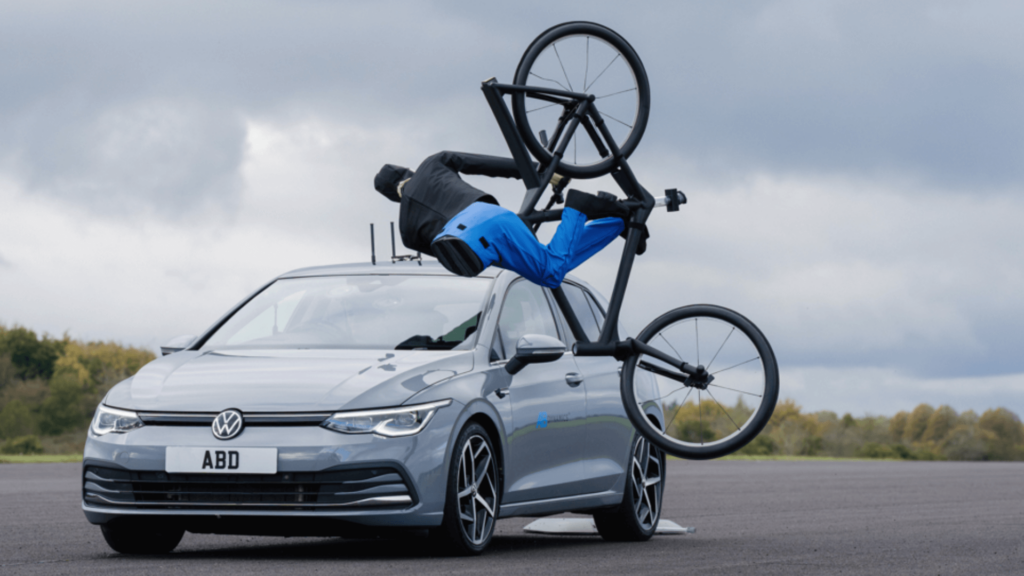
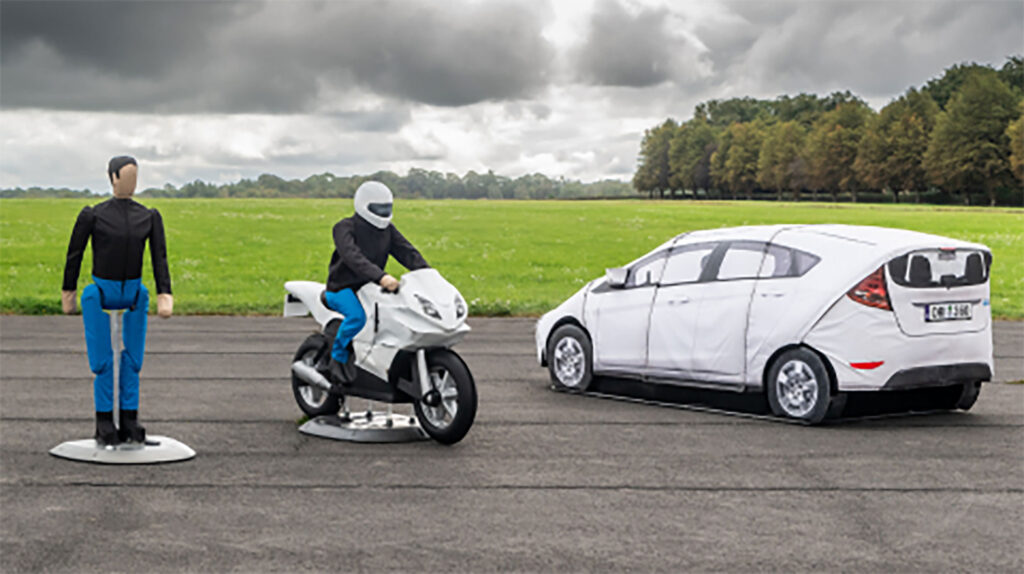
Our soft targets, which include the Soft Car 360®, Soft Motorcycle 360™, Soft Pedestrian 360™, Soft Scooter 360™ and Soft Bicycle 360™, replicate the radar, lidar and camera signatures of real objects while enabling safe testing in scenarios where there might be a collision.
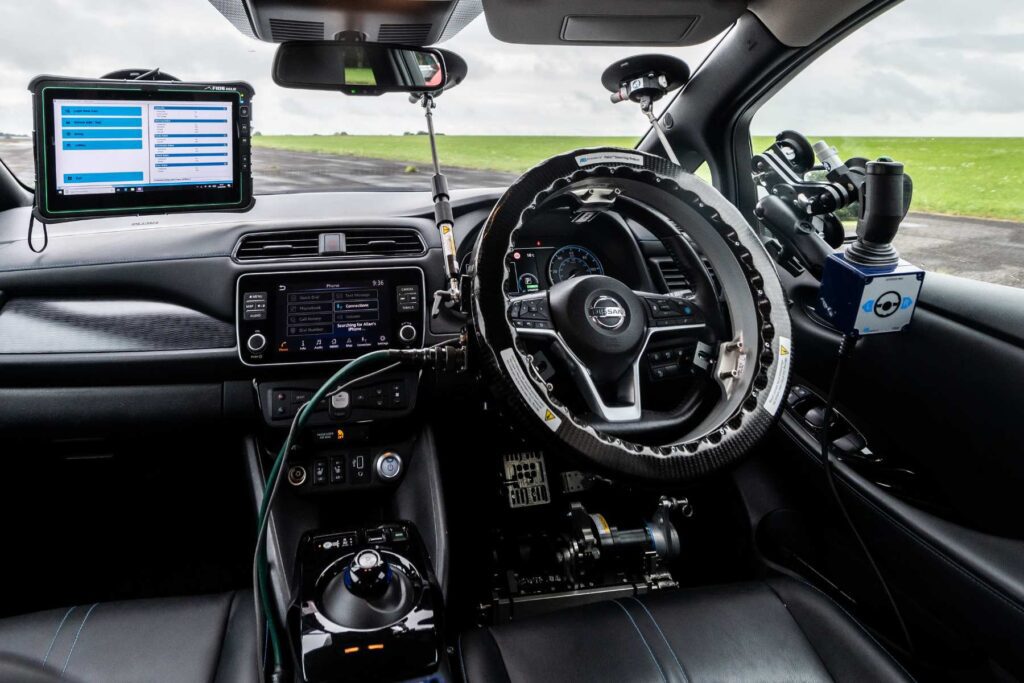
For manoeuvres requiring precise control of the test vehicle, our steering and pedal driving robots provide millimetre-accurate control of steering and speed. This eliminates driver variability and ensures every test run consistently meets the strict requirements set out in the AIS standards.
At the core of this ecosystem is our software suite, which synchronises the test vehicle with the targets, manages complex scenario automation and automatically validates tests in real-time. Together, these tools provide a complete solution for testing and validating ADAS performance.
On top of this, AB Dynamics has a comprehensive library of preconfigured and validated industry standard test scenarios, called Special Groups. This eliminates the requirement for test teams to spend months of development time creating, calculating and validating the base scenarios before testing can begin. As the AIS standards are technically harmonised with their European counterparts, AB Dynamics Special Groups are ready to be implemented to give OEMs a head start once the mandate is finalised.
We will be exhibiting our ADAS test solutions at the Symposium on International Automotive Technology (SIAT) 28-30th January 2026 in Pune, India. The company will have a range of its equipment on display including the Soft Car 360, Soft Motorcycle 360, LaunchPad 80 and Spin. Our engineering team will also be available to discuss how our end-to-end ADAS testing ecosystem and global expertise can help manufacturers navigate the new regulatory landscape with confidence.
If you are attending SIAT 2026 and would like to discuss the challenges of the 2026 regulations and find out more about our solutions get in touch to arrange a meeting with one of our specialists at sales@abdynamics.com.