English
 What is 'dooring'?
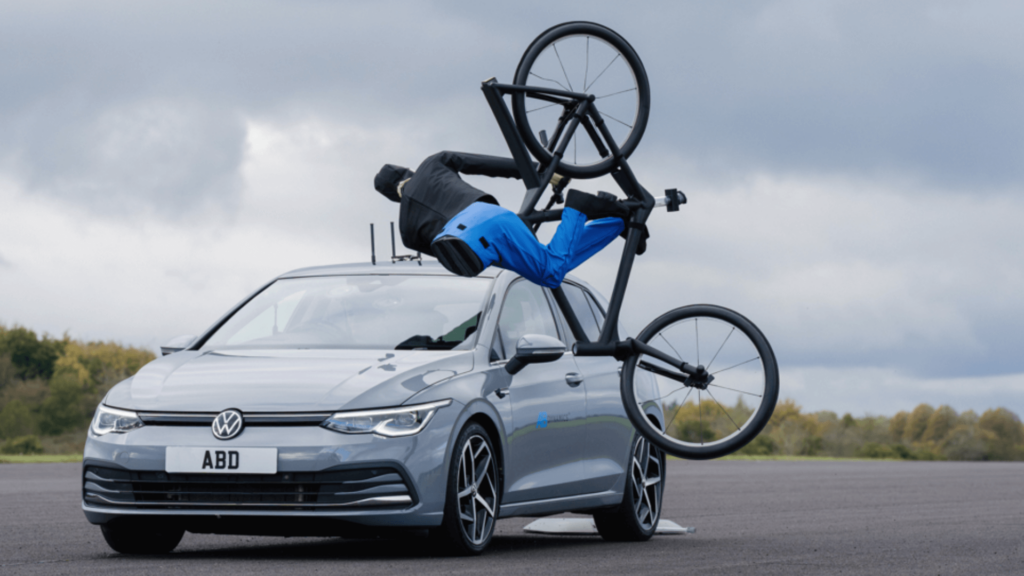
Dooring (when a vehicle occupant opens a door into the path of a cyclist or motorcyclist) is a serious road safety issue and a daily worry for many vulnerable road users commuting in busy cities. With Germany’s Federal Ministry of Transport now signalling its intention to mandate door‑opening warning (DOW) systems, the conversation around preventing these incidents is evolving. To understand what this shift means for road users and for the automotive industry, we spoke with AB Dynamics’ Matthias Schoeberl to explore why this development matters and how active safety technologies can support safer roads.
The German Federal Ministry of Transport has signalled its intention to mandate door-opening warning (DOW) systems in vehicles to prevent dooring accidents. Although often perceived as a niche accident type, recent high-profile incidents have put it in the spotlight, and the increased attention has put pressure on regulatory bodies to review the situation.
While dooring incidents only account for 3% of cycling accidents in Germany, the resulting injuries can be very serious. Based on official annual cyclist casualty figures, this equates to over 20 fatalities, around 290 serious injuries and approximately 1,700 minor injuries attributable to dooring-type incidents. It is also widely acknowledged that dooring is under-reported. German national accident statistics (Destatis) do not currently classify dooring as a distinct accident type, meaning the true scale of the problem is likely higher than official figures suggest.
International data is more alarming when focussed on urban areas alone. For example, dooring incidents accounted for nearly 20% of cyclist injuries in Chicago in 2011, nearly 12% in Toronto and 8% in London.
Every cyclist knows that familiar flicker of worry when passing a row of parked cars. The idea that vehicles will soon actively help prevent those accidents is a huge step forward. Germany’s proposal will require DOW systems that not only warn occupants of approaching cyclists but potentially intervene via automatic stop/hold functions to temporarily block the door. While Germany’s proposal would introduce a mandatory requirement at national level, dooring prevention is not a new concept in vehicle safety assessment. Euro NCAP is currently the primary driver for adopting anti-dooring technology in Europe and includes a dooring test scenario within its new Low Speed Collisions protocol introduced for 2026.
From voluntary assessment to potential regulation
However, Euro NCAP is a voluntary consumer rating scheme, not a legal requirement. Germany’s announcement shows that, as active safety technologies mature and real-world data accumulates, regulators are increasingly prepared to move beyond encouragement and into enforcement.
What does the Euro NCAP dooring test involve?
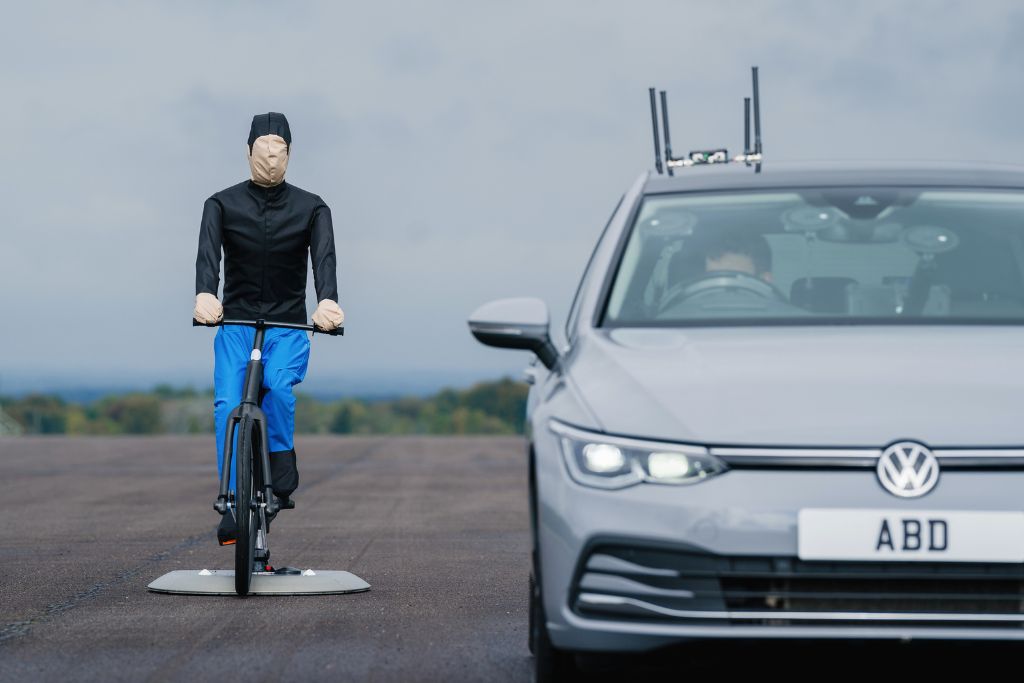
Euro NCAP’s dooring scenario, Car-to-Bicyclist Dooring Adult (CBDA), evaluates whether a vehicle’s exit assist system can detect an approaching cyclist and either warn occupants or prevent the door from opening into the cyclist’s path. The assessments measure detection of the cyclist, timing of the intervention and performance of the alerts and door-holding system.
The test procedure includes:
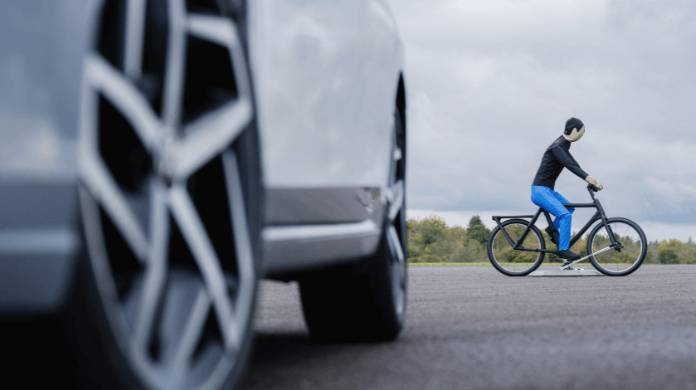
- A moving cyclist target travels at 10-20 km/h along a trajectory approximately 1 metre lateral offset from the side of a stationary vehicle.
- The cyclist passes the nearside of the vehicle, with the rear edge of the front door used as the longitudinal reference point.
- The door is opened by the occupant which is triggered by the cyclist position.
- The scenario is configured so that, without system intervention, opening the door would result in a collision between the door and the cyclist.
How is AB Dynamics supporting dooring testing and development?
For test engineers, the challenge lies in reproducing this scenario repeatedly and accurately to validate sensor performance. It demands precise knowledge of the test vehicle position and accurate control and timing of the targets (in this case a cyclist) across repeated runs.
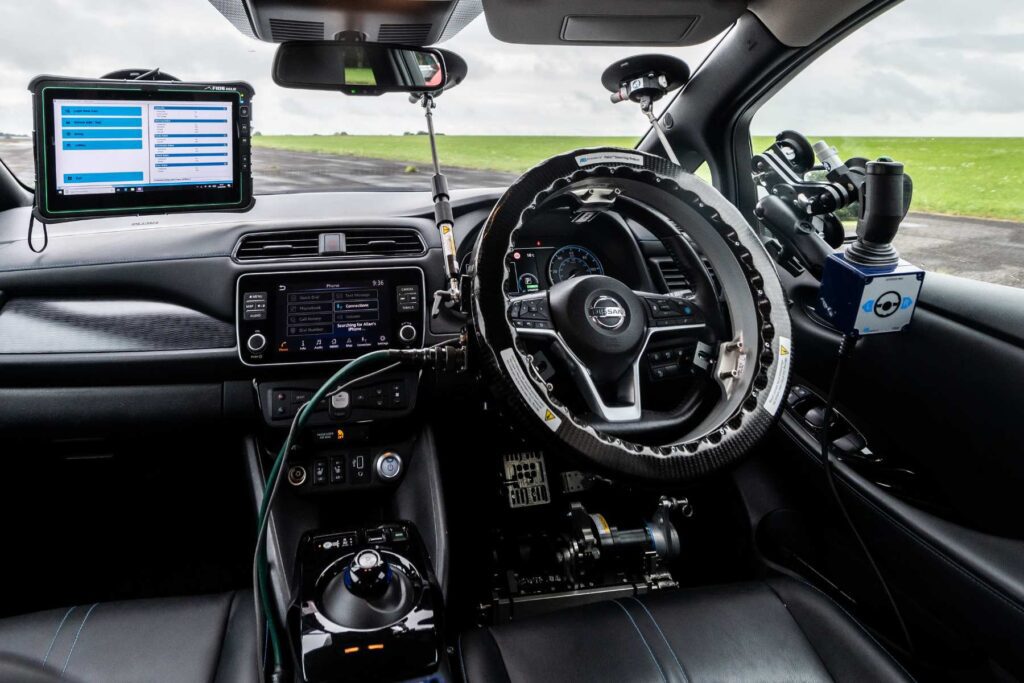
AB Dynamics provides a fully integrated testing ecosystem that supports the design, execution and analysis of dooring tests. It is the same flexible solution that is also used to conduct every other industry-standard ADAS scenario.
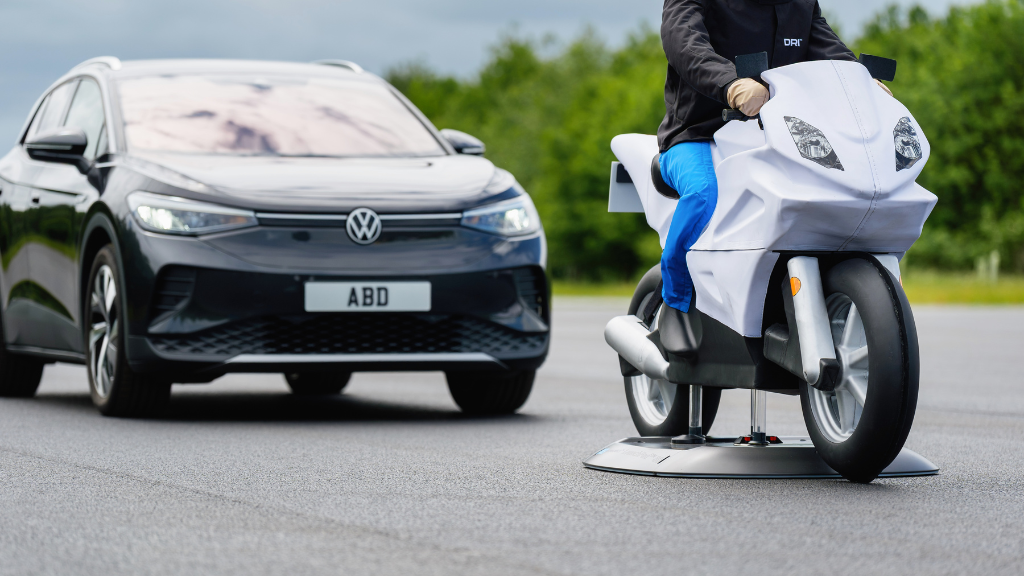
This ecosystem enables customers to automatically position the vehicle under test (VUT), ensuring the location and the heading is perfectly parallel with the approaching cyclist. Similarly, a test path is used to control the position and movement of a cyclist dummy, which is mounted to a LaunchPad platform, to consistently run in a straight line and at precisely the target speed.
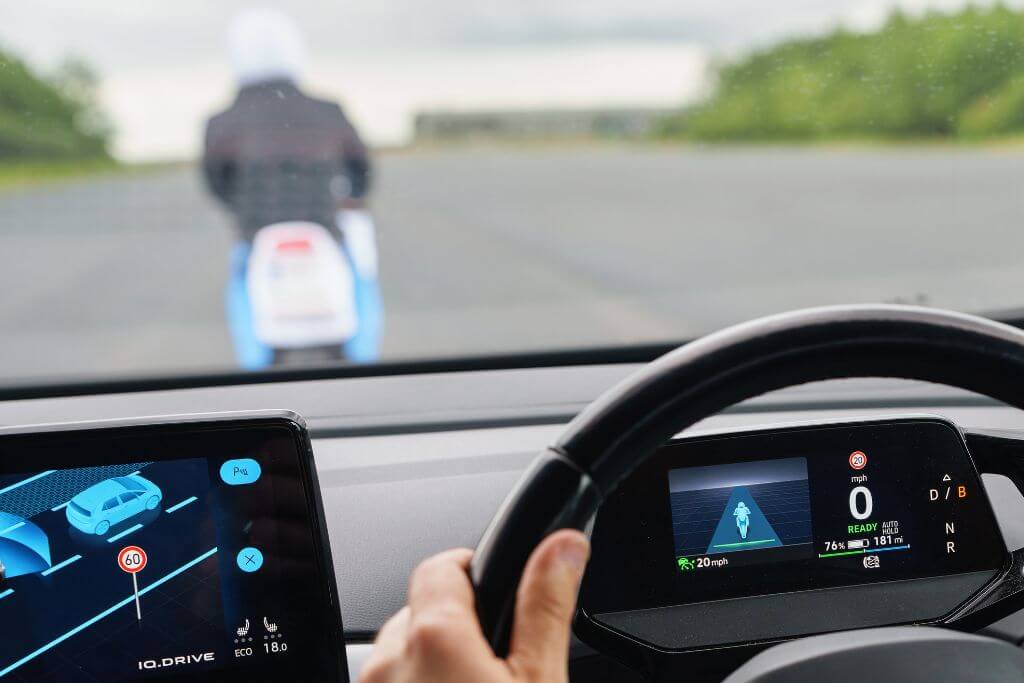
With real-time communication between the VUT and bicycle target, a countdown timer is displayed to the vehicle occupant indicating the precise moment to open the door based on the position of the approaching cyclist. AB Dynamics’ software has a dedicated interface allowing key signals to be logged from the vehicle including any audible warnings or the exact moment the door is opened. The Euro NCAP protocol permits a door-operation tolerance window of up to 1.4 m at 20 km/h, which, paired with AB Dynamics' synchronised countdown cue, is reliably and consistently achieved by the vehicle occupant using manual door operation. The data from the test is used to feed the integrated post processing report, which provides a pass/fail result based on the test criteria.
Pre-configured dooring scenarios within AB Dynamics’ Special Groups library
As the dooring test is already defined within the Euro NCAP protocol, AB Dynamics has designed, calculated and verified the complete scenario within its Special Groups library. Special Groups is a comprehensive database of pre-configured, industry-standard ADAS scenarios.
For the dooring test, this means the cyclist trajectory, vehicle positioning and timing relationships are already established and validated, enabling test teams to focus on system behaviour rather than scenario construction. This proven setup is used to conduct dooring tests at OEMs and test laboratories across the world.
What next for dooring regulations?
Germany has now made a firm political commitment to mandate door-opening warning systems, transitioning from voluntary safety assessments to a formal regulatory requirement. The proposal is currently in the policy and drafting stage. The next steps will likely involve defining the technical standards and a consultation period with industry stakeholders before progressing to government approval.
Whether you ride a bicycle or a motorbike, the fear of a door suddenly swinging open is universal. Mandating DOW systems won’t eliminate that risk entirely, but it will meaningfully reduce it. The German Federal Ministry of Transport has a history of successfully lobbying the European Commission to include active safety systems within EU type approval. As a result, anti-dooring technologies could ultimately be mandated not only in Germany, but across Europe.
Momentum is also building at international level. Earlier this year in April, Germany and China presented a report on the first in a series of jointly led workshops on door-opening warning systems at the UNECE Working Party on General Safety Provisions (GRSG). With no mandatory UN Regulation or Global Technical Regulation currently covering DOWS, the workshops are reviewing international accident data and exploring potential technical requirements. The findings are due later in 2026 and these could be early steps towards a possible harmonised global standard.
For test teams preparing for the 2026 Euro NCAP cycle and the potential regulatory tightening that could follow, the dooring scenario is already deployable today within a proven, integrated AB Dynamics test environment without the need for any new hardware.
To learn how AB Dynamics can support your VRU test programme or to arrange a demo of the Soft Bicycle 360, contact sales@abdynamics.com.