English
 The Ministry of Road Transport’s (MoRTH) draft Bharat NCAP 2.0 protocol replaces a crash-led star rating with a new five-pillar, 100-point system that scores for accident avoidance, vulnerable road user (VRU) protection and post-crash safety alongside the crash itself. From October 2027 onwards, vehicles in India assessed under Bharat NCAP will be scored on how well they help avoid crashes and protect the people outside the vehicle. For test and programme engineers, this is a substantial change. Vipul Davé, Business Development Manager here at AB Dynamics, answers the questions we are hearing most from Indian OEMs and test houses.
What is actually changing under Bharat NCAP 2.0?
The current programme, launched in October 2023 under automotive standard AIS-197, scores a car in two crash-test pillars, Adult Occupant Protection and Child Occupant Protection, alongside a separate Safety Assist Technologies (SAT) check that confirms specified items are fitted, such as electronic stability control (ESC) and ISOFIX mounts. MoRTH’s draft notification for AIS-197 Revision 1, published in November 2025 and better known as Bharat NCAP 2.0, introduces a single star rating calculated out of 100 points across five pillars.
What are the five pillars, and how are they weighted?
Crash Protection carries 55 of the 100 points, Vulnerable Road-User Protection 20, Safe Driving 10, Accident Avoidance 10 and Post-Crash Safety 5. Crash Protection is still the largest single block, but there is a clear shift to account for the broader safety performance of a vehicle. The draft proposes a 70-point threshold for five stars between 2027 and 2029, rising to 80 points from 2029 to 2031. It also states that a ‘5-star rated vehicle cannot have any assessment vertical with a 'zero' score’. So, although the draft does not formally mandate Autonomous Emergency Braking (AEB) or driver-warning systems, such as Lane Departure Warning (LDW) and Forward Collision Warning (FCW), no vehicle can reach five stars without them.
What does a ‘point’ actually represent in test terms?
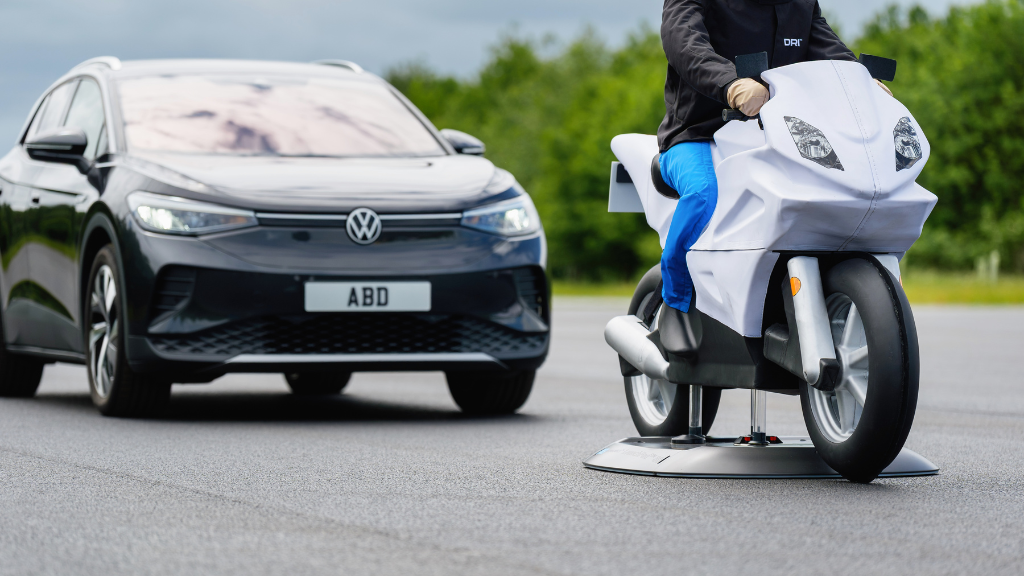
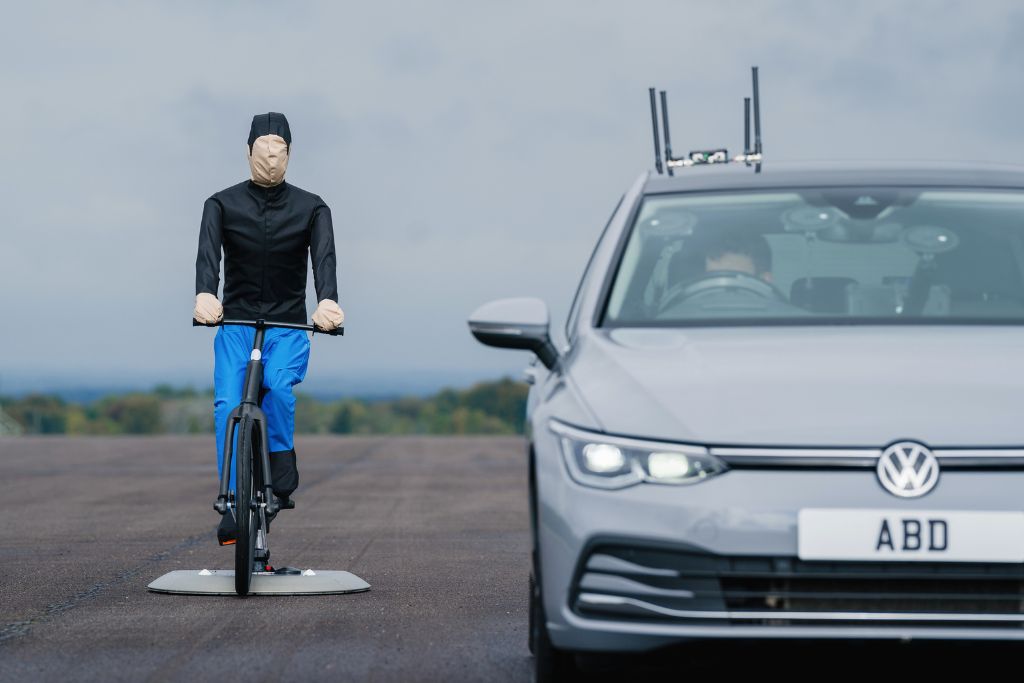
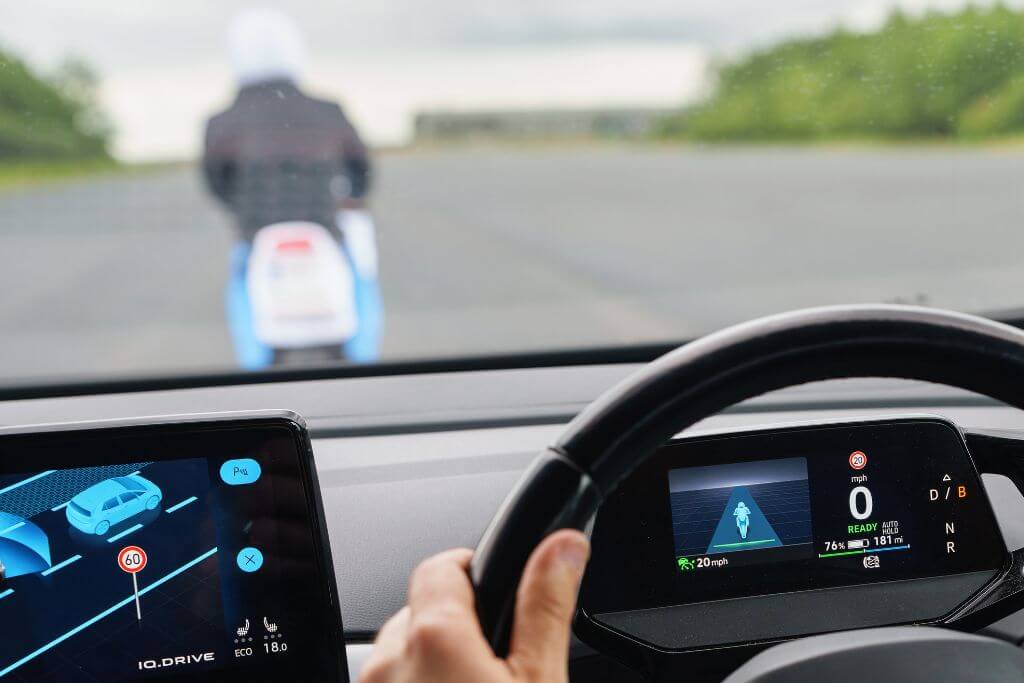
Crash Protection points come from five physical crash tests, up from three today. Each test uses instrumented crash-test dummies to measure injury criteria, from which occupant injury risk scores are derived. In essence, the less risk of an injury occurring the more points you earn. Vulnerable Road-User Protection combines pedestrian-impact testing on the bonnet and bumper with optional active-safety tests of pedestrian and motorcyclist AEB. Safe Driving provides up to 10 points for the adoption of driver-warning technologies. Accident Avoidance points come from ADAS systems that detect a hazard and intervene inside a defined window to minimise or prevent a collision. Post-Crash Safety, at 5 points, rewards features that help occupants survive and be rescued after the crash.
Which ADAS tests move into the scoring protocol?
The Safe Driving pillar lists eight driver-warning technologies, such as lane departure warning, blind spot detection and driver drowsiness alerts, and a car can score on a maximum of five. The Accident Avoidance pillar awards points for AEB on top of the now mandatory fitment of ESC. Vulnerable Road-User Protection also adds optional AEB tests involving pedestrians and motorcyclists. Add it up and AEB across all three pillars is worth up to 40 raw points across Accident Avoidance and VRU, plus 5 raw in Safe Driving for FCW, which is up to 17 weighted points of the 100-point overall score. An OEM choosing not to adopt AEB is leaving a significant number of points on the table
How closely does this track with Euro NCAP?
Bharat NCAP is benefiting from the experience and learning from Euro NCAP’s ever evolving requirements. By selecting the core requirements set by Euro NCAP over the last 10 years or so, the journey to align requirements has begun.
Euro NCAP’s 2026 protocol, the largest revision since the overall star-rating system was introduced in 2009, restructured the rating into four areas: Safe Driving, Crash Avoidance, Crash Protection and Post-Crash Safety. Bharat NCAP 2.0 covers the same ground with five pillars, the difference being that vulnerable road users are pulled out as a pillar of its own. Given how exposed pedestrians, cyclists and two-wheeler riders are on Indian roads, that emphasis is well placed.
However, India’s AIS test standards do align closely with their European counterparts, drawing on Euro NCAP ASEAN NCAP and Global NCAP methodologies, so there is a lot of overlap. This alignment is good news for OEMs, especially those with extensive export ambitions.
How much extra testing is Bharat NCAP 2.0 going to create?
This is the question we hear most from Indian OEMs. The proposed Bharat NCAP 2.0 rating is not just one test programme; it is effectively five. A model that previously needed a crash programme now needs crash testing, pedestrian-impact testing, driver-warning technology validation, active-safety AEB scenario testing and post-crash validation. The workload per model rises sharply, and it does so for every manufacturer at once.
India is aware of this change and is working to develop the infrastructure required to significantly increase test capacity, but it hasn’t arrived just yet. ARAI’s ADAS Test City near Pune, India’s first dedicated ADAS proving ground, is one sign of the investments underway. But the full national test infrastructure is still ramping up, and October 2027 is closer than it looks once you take into account development lead times.
So how does India’s test industry absorb the extra workload?
Simulation is part of the answer. Euro NCAP’s 2026 protocol has expanded the role of virtual testing within its active-safety assessment, letting engineers cover the breadth of scenario variations that are impractical to run physically. It is being adopted more and more, but in truth, it is still maturing in Europe and is at an even earlier stage in India. Simulation helps to reduce the physical test burden, of course, but it won’t remove it.
So, the most practical and effective lever to pull is efficiency. The protocol and the tests to be conducted are fixed; there is nothing we can do about that. What an OEM can control is how many runs it has to do to get valid results, how quickly it can set up and reposition for the next test, how much planning it can do before getting to the track, and how it adjusts the test programme in real time based on results. To do that, you need a highly accurate, repeatable and automated test system.
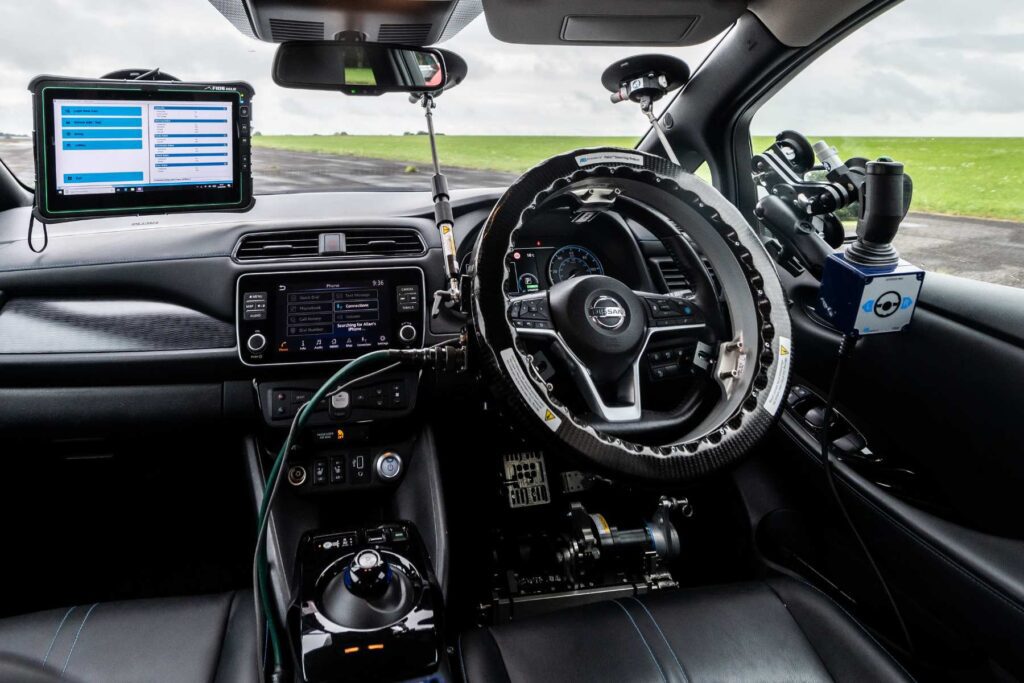
That is what an integrated test ecosystem is built to deliver. We have developed a fully integrated, end-to-end ADAS testing ecosystem that brings every element of an ADAS test programme into a single, connected toolchain. Driving robots, ADAS targets, ADAS platforms and telemetry systems work seamlessly with our Synchro software to choreograph vehicles and targets with centimetre-level accuracy. We have also created an extensive library of predefined and validated industry-standard ADAS tests to automate testing and remove the burden of creating scenarios from scratch. Our integrated Post Processor delivers real-time pass/fail results, which enable engineers to evaluate outcomes instantly and adjust their programme without leaving the track.
What should Indian OEMs and test teams be doing today?
Bharat NCAP 2.0 is absolutely the right direction for Indian road safety. It marks the start of a journey bringing ADAS requirements for Indian market in-line with wider global standards. The work to be ready for October 2027 is not a 2027 problem; it is a today problem. The OEMs that start now, with the right integrated test ecosystem, will arrive at the deadline with the best chance of achieving five-star ratings.
For more information on AB Dynamics track test product ecosystem, click here or contact sales@abdynamics.com.