English
With one of the largest vehicle populations in the world, India presents both a substantial mobility challenge and a major opportunity for innovation in road safety. Hundreds of millions of vehicles travel daily across a vast and complex transportation network, serving a population of more than 1.4 billion. Despite ongoing efforts by policymakers and vehicle manufacturers to improve infrastructure and transportation systems, road safety remains a pressing concern. The scale of road traffic incidents continues to highlight the need for more effective vehicle validation, ADAS, and autonomous driving systems. As the automotive industry intensifies its focus on reducing accidents and saving lives, demand is growing for advanced testing.
In this article, Vipul Davé, Business Development Manager at AB Dynamics, explores why India's complex road environment demands a distinct approach to ADAS development and how real-world validation can help deliver safer outcomes for all road users.

In 2024, India recorded more than 177,000 road fatalities, the highest total in its history. At 12.5 deaths per 100,000 inhabitants, India’s road fatality rate is approximately 2.7 times higher than that of the European Union. More importantly, the composition of these fatalities highlights a road environment unlike that seen in other automotive markets. Two-wheeler riders accounted for 46.2% of all road deaths, pedestrians represented 20.6%, and cyclists a further 2.3%. Together, these vulnerable road users (VRUs) account for more than two-thirds of all fatalities on Indian roads.
These figures do not simply strengthen the safety case for ADAS. They also raise a more strategic question for the automotive industry: should India follow the ADAS development path established by global markets, or should it develop a distinctly Indian approach built around the realities of its own roads? Increasingly, evidence suggests the latter.
From market adaptation to market-led development
For many years, ADAS systems have largely been designed around the driving environments of developed markets. Regulatory protocols, validation scenarios and training datasets have focused on traffic conditions commonly found in Europe, China, North America, Japan and South Korea. India presents a fundamentally different operating environment.
The challenge is not simply the presence of VRUs. Global ADAS systems are already highly capable of detecting pedestrians, cyclists and motorcyclists. The challenge is the sheer diversity, density and unpredictability of interactions between road users that occur simultaneously on Indian roads every day.
The Indian traffic environment
Indian roads present one of the world’s most complex environments for perception systems.
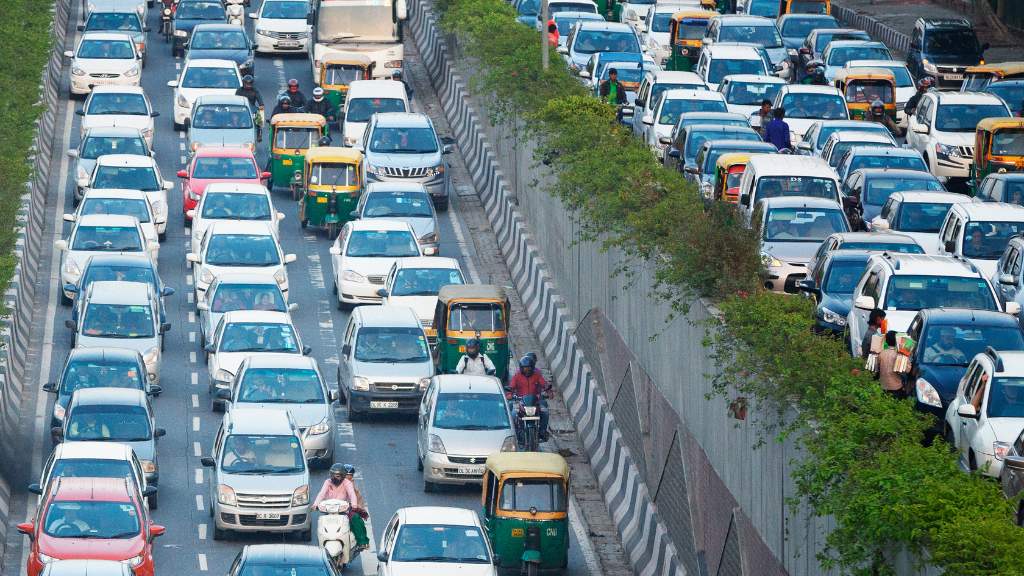
A typical urban junction may contain:
- Multiple motorcycles filtering through traffic from different directions
- Autorickshaws operating alongside passenger cars and commercial vehicles
- Pedestrians crossing on unstructured trajectories
- Cyclists and cycle-rickshaws sharing road space
- Street vendors pushing handcarts
- Livestock moving through or alongside traffic
While each of these road users can be found elsewhere in the world, the defining characteristic of Indian roads is their coexistence. ADAS systems are often required to assess numerous potential hazards simultaneously, many moving at different speeds and following less predictable paths than those typically represented in global test scenarios. For perception systems, the challenge is increasingly one of prioritisation and prediction rather than simple detection.
Why India requires its own ADAS development framework
The automotive industry has invested heavily in global ADAS platforms, and these systems provide a strong foundation for deployment in India. However, a perception stack trained primarily on European or North American driving conditions may not encounter enough examples of the situations that define Indian roads.
Global ADAS architectures achieve VRU detection successfully but for Indian road networks where they are all frequently combined simultaneously, alongside additional road users such as autorickshaws, handcarts and livestock, it highlights the need for additional development, calibration and validation focused specifically on Indian operating conditions.
Building an Indian ADAS ecosystem
Several vehicle manufacturers are already responding, increasingly carrying out Indian-specific calibration, extensive local testing and validation against real-world Indian traffic conditions. This reflects a broader recognition that India offers an opportunity not merely to deploy ADAS technology, but to shape how future ADAS systems are developed. As ADAS adoption accelerates, India has the potential to become a leading centre for scenario development, perception training datasets and multi-actor validation methodologies amongst others.
Why validation matters
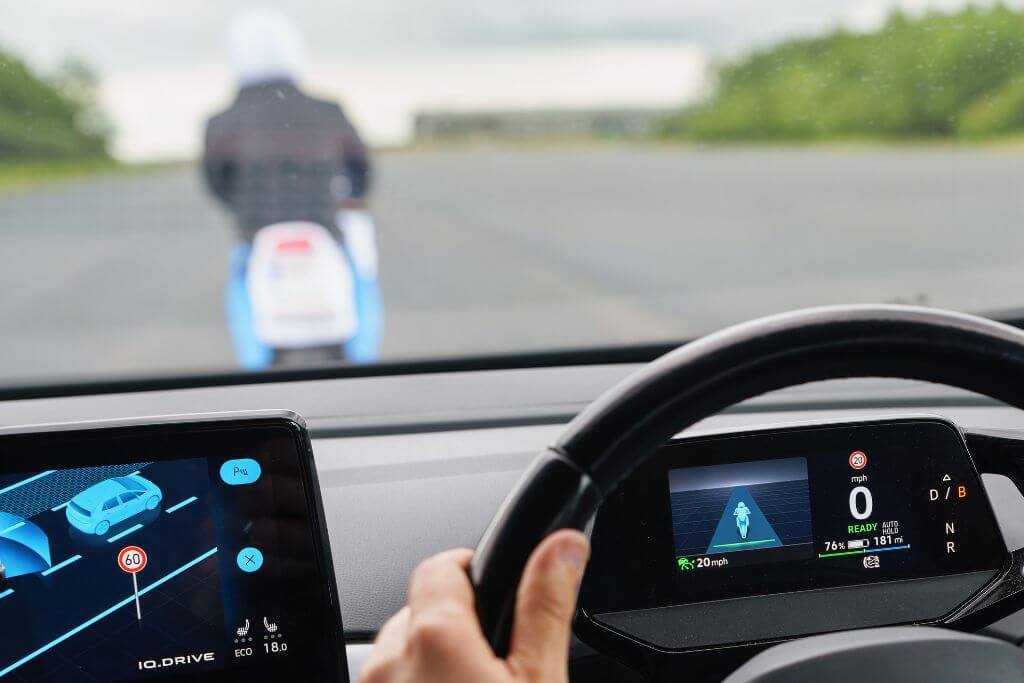
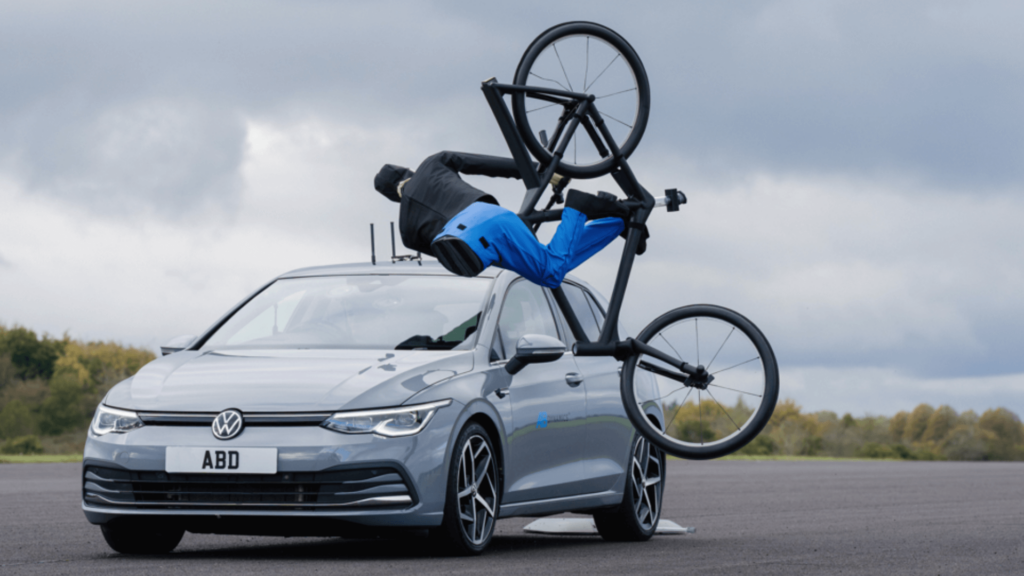
Developing ADAS for Indian conditions requires more than collecting local data. It requires the ability to recreate real-world situations in a safe, repeatable and measurable way. The engineering task is not simply to prove that a system can detect a pedestrian or a motorcycle. It is to assess how effectively the system prioritises risk when faced with several VRUs at once. This is where advanced scenario orchestration becomes essential.
At AB Dynamics, we see increasing demand from OEMs and engineering teams seeking to validate ADAS performance against the complexity of real-world Indian traffic. The challenge is creating scenarios that accurately reflect these conditions while remaining repeatable enough for objective engineering assessment.
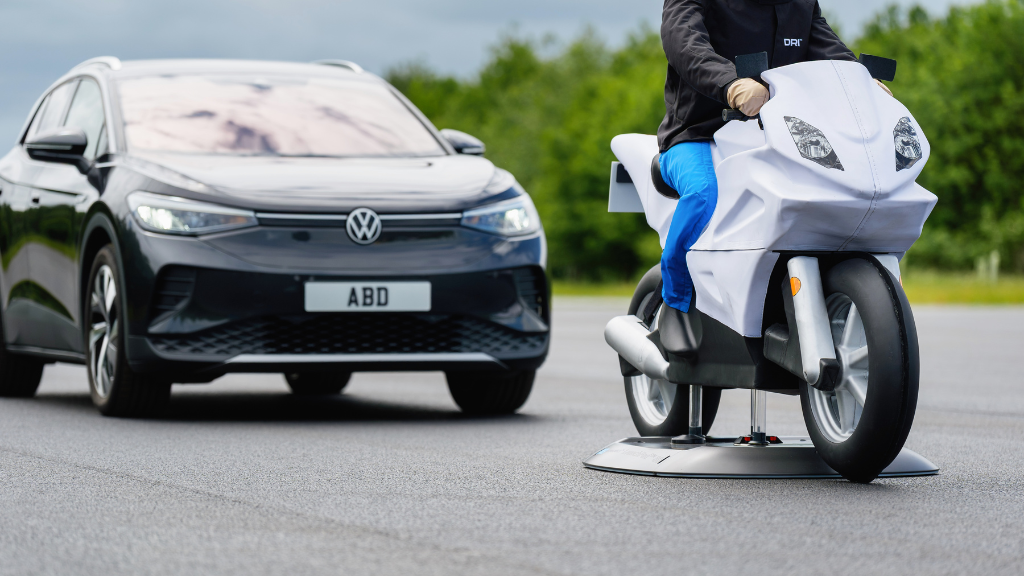
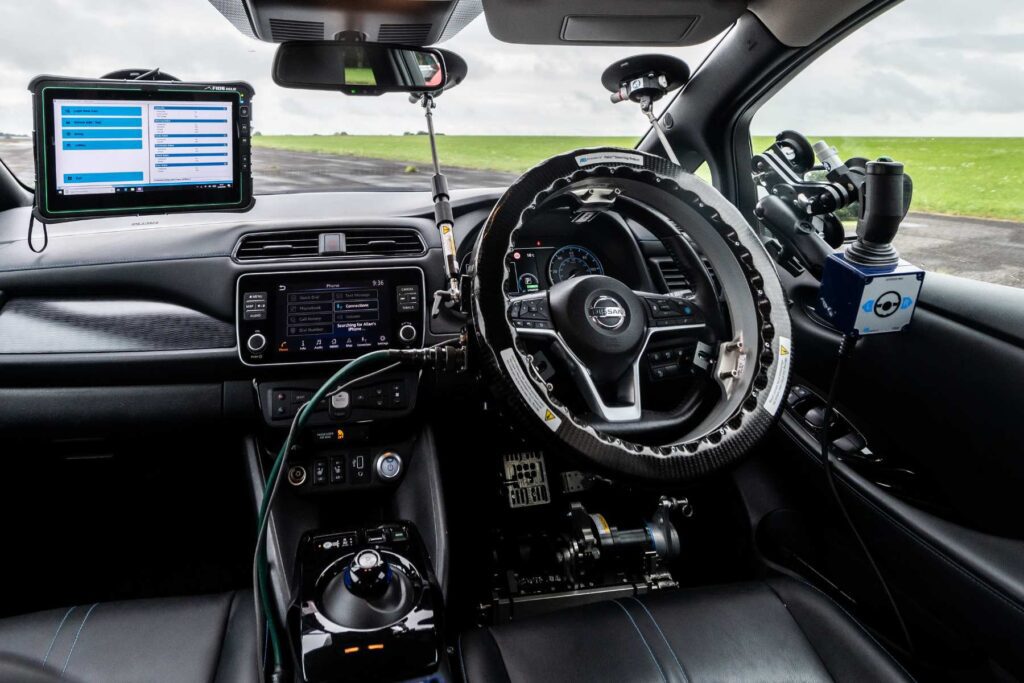
Using solutions such as Synchro, engineers can coordinate vehicles, VRU platforms, soft targets and robotic systems within a single synchronised environment. Complex scenarios involving multiple simultaneous actors can be reproduced repeatedly, allowing development teams to evaluate system performance with confidence and consistency.
Supporting India’s next phase of ADAS development
No engineering team can tune for prioritisation and prediction without being able to stage conditions of that complexity repeatedly, measure them objectively and compare one calibration against the next. The complexity has to be reproduced, not simply encountered.
The incentive isn’t just safety but also consumer acceptance. ADAS is becoming a feature Indian buyers actively compare, so a system that intervenes correctly in dense traffic, and avoids false positives, strengthens the safety case and the showroom case at once.
At AB Dynamics, we see this as one of the most significant opportunities in automotive testing today. India is not waiting for the rest of the world to define what ‘good’ looks like on its roads. The manufacturers and test facilities are building that definition now along with the test and validation capabilities to prove it. As one of the most challenging environments for ADAS to perform, is India set to become the go-to global standard?
For more information on AB Dynamics ADAS testing solutions, click here or contact sales@abdynamics.com.