

 English
 What is 'dooring'?
Dooring (when a vehicle occupant opens a door into the path of a cyclist or motorcyclist) is a serious road safety issue and a daily worry for many vulnerable road users commuting in busy cities. With Germany’s Federal Ministry of Transport now signalling its intention to mandate door‑opening warning (DOW) systems, the conversation around preventing these incidents is evolving. To understand what this shift means for road users and for the automotive industry, we spoke with AB Dynamics’ Matthias Schoeberl to explore why this development matters and how active safety technologies can support safer roads.

The German Federal Ministry of Transport has signalled its intention to mandate door-opening warning (DOW) systems in vehicles to prevent dooring accidents. Although often perceived as a niche accident type, recent high-profile incidents have put it in the spotlight, and the increased attention has put pressure on regulatory bodies to review the situation.
While dooring incidents only account for 3% of cycling accidents in Germany, the resulting injuries can be very serious. Based on official annual cyclist casualty figures, this equates to over 20 fatalities, around 290 serious injuries and approximately 1,700 minor injuries attributable to dooring-type incidents. It is also widely acknowledged that dooring is under-reported. German national accident statistics (Destatis) do not currently classify dooring as a distinct accident type, meaning the true scale of the problem is likely higher than official figures suggest.
International data is more alarming when focussed on urban areas alone. For example, dooring incidents accounted for nearly 20% of cyclist injuries in Chicago in 2011, nearly 12% in Toronto and 8% in London.
Every cyclist knows that familiar flicker of worry when passing a row of parked cars. The idea that vehicles will soon actively help prevent those accidents is a huge step forward. Germany’s proposal will require DOW systems that not only warn occupants of approaching cyclists but potentially intervene via automatic stop/hold functions to temporarily block the door. While Germany’s proposal would introduce a mandatory requirement at national level, dooring prevention is not a new concept in vehicle safety assessment. Euro NCAP is currently the primary driver for adopting anti-dooring technology in Europe and includes a dooring test scenario within its new Low Speed Collisions protocol introduced for 2026.
From voluntary assessment to potential regulation
However, Euro NCAP is a voluntary consumer rating scheme, not a legal requirement. Germany’s announcement shows that, as active safety technologies mature and real-world data accumulates, regulators are increasingly prepared to move beyond encouragement and into enforcement.
What does the Euro NCAP dooring test involve?
Euro NCAP’s dooring scenario, Car-to-Bicyclist Dooring Adult (CBDA), evaluates whether a vehicle’s exit assist system can detect an approaching cyclist and either warn occupants or prevent the door from opening into the cyclist’s path. The assessments measure detection of the cyclist, timing of the intervention and performance of the alerts and door-holding system.
The test procedure includes:
- A moving cyclist target travels at 10-20 km/h along a trajectory approximately 1 metre lateral offset from the side of a stationary vehicle.
- The cyclist passes the nearside of the vehicle, with the rear edge of the front door used as the longitudinal reference point.
- The door is opened by the occupant which is triggered by the cyclist position.
- The scenario is configured so that, without system intervention, opening the door would result in a collision between the door and the cyclist.
How is AB Dynamics supporting dooring testing and development?
For test engineers, the challenge lies in reproducing this scenario repeatedly and accurately to validate sensor performance. It demands precise knowledge of the test vehicle position and accurate control and timing of the targets (in this case a cyclist) across repeated runs.
AB Dynamics provides a fully integrated testing ecosystem that supports the design, execution and analysis of dooring tests. It is the same flexible solution that is also used to conduct every other industry-standard ADAS scenario.
This ecosystem enables customers to automatically position the vehicle under test (VUT), ensuring the location and the heading is perfectly parallel with the approaching cyclist. Similarly, a test path is used to control the position and movement of a cyclist dummy, which is mounted to a LaunchPad platform, to consistently run in a straight line and at precisely the target speed.
With real-time communication between the VUT and bicycle target, a countdown timer is displayed to the vehicle occupant indicating the precise moment to open the door based on the position of the approaching cyclist. AB Dynamics’ software has a dedicated interface allowing key signals to be logged from the vehicle including any audible warnings or the exact moment the door is opened. The Euro NCAP protocol permits a door-operation tolerance window of up to 1.4 m at 20 km/h, which, paired with AB Dynamics' synchronised countdown cue, is reliably and consistently achieved by the vehicle occupant using manual door operation. The data from the test is used to feed the integrated post processing report, which provides a pass/fail result based on the test criteria.
Pre-configured dooring scenarios within AB Dynamics’ Special Groups library
As the dooring test is already defined within the Euro NCAP protocol, AB Dynamics has designed, calculated and verified the complete scenario within its Special Groups library. Special Groups is a comprehensive database of pre-configured, industry-standard ADAS scenarios.
For the dooring test, this means the cyclist trajectory, vehicle positioning and timing relationships are already established and validated, enabling test teams to focus on system behaviour rather than scenario construction. This proven setup is used to conduct dooring tests at OEMs and test laboratories across the world.
What next for dooring regulations?
Germany has now made a firm political commitment to mandate door-opening warning systems, transitioning from voluntary safety assessments to a formal regulatory requirement. The proposal is currently in the policy and drafting stage. The next steps will likely involve defining the technical standards and a consultation period with industry stakeholders before progressing to government approval.
Whether you ride a bicycle or a motorbike, the fear of a door suddenly swinging open is universal. Mandating DOW systems won’t eliminate that risk entirely, but it will meaningfully reduce it. The German Federal Ministry of Transport has a history of successfully lobbying the European Commission to include active safety systems within EU type approval. As a result, anti-dooring technologies could ultimately be mandated not only in Germany, but across Europe.
Momentum is also building at international level. Earlier this year in April, Germany and China presented a report on the first in a series of jointly led workshops on door-opening warning systems at the UNECE Working Party on General Safety Provisions (GRSG). With no mandatory UN Regulation or Global Technical Regulation currently covering DOWS, the workshops are reviewing international accident data and exploring potential technical requirements. The findings are due later in 2026 and these could be early steps towards a possible harmonised global standard.
For test teams preparing for the 2026 Euro NCAP cycle and the potential regulatory tightening that could follow, the dooring scenario is already deployable today within a proven, integrated AB Dynamics test environment without the need for any new hardware.
To learn how AB Dynamics can support your VRU test programme or to arrange a demo of the Soft Bicycle 360, contact sales@abdynamics.com.
India is preparing for one of the most significant updates to commercial vehicle safety in its history. The Ministry of Road Transport and Highways (MoRTH) has announced that from 1st April 2026, any newly introduced models of passenger vehicles with more than eight seats, buses and trucks must be equipped with a defined package of Advanced Driver Assistance Systems (ADAS). This mandate will also become applicable to current production models from 1st October 2026.
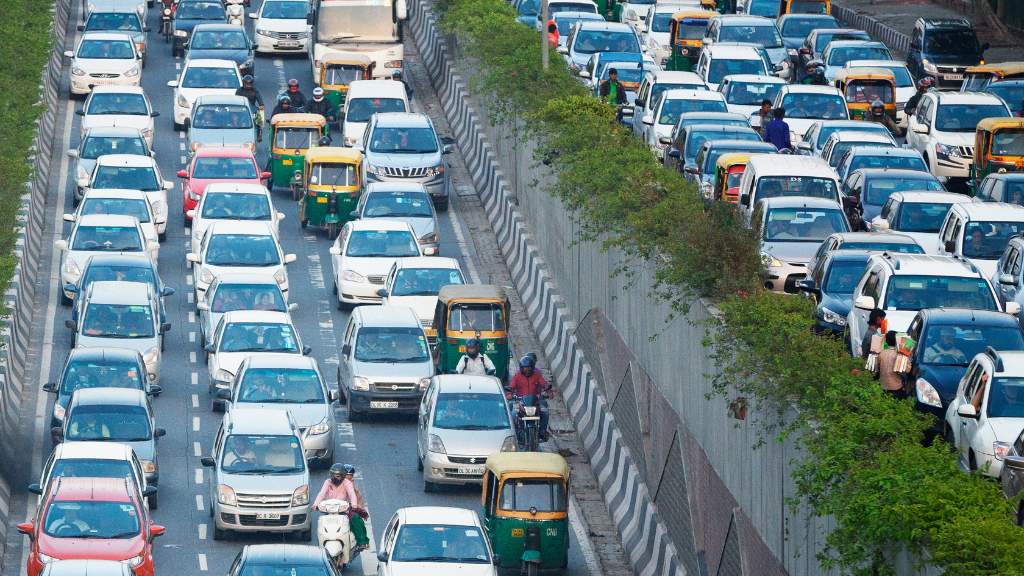
This is undeniably a major step towards improved road safety in the region. Estimates suggest that there were 168,000 deaths in India in 2022 due to road crashes, with up to 461,000 people suffering injuries. A majority of those dying on the roads are pedestrians, cyclists and motorcyclists with data suggesting that young people are most vulnerable.
Road traffic injuries are now one of the leading causes of death among children and adolescents in India. Children account for roughly 10% of all road crash fatalities, with estimates suggesting there are up to 45 child deaths every day. For comparison, this is around 2% in both the EU and the US.
With trucks and buses involved in more than 25% of total road accident deaths in India, a widespread adoption of preventative safety systems is a vital step toward improving everyday safety.
What is changing?
The upcoming regulation changes require a suite of ADAS technologies to be fitted as mandatory to large passenger and heavy vehicles across the M2, M3, N2 and N3 categories, going beyond passenger car (M1) requirements where no ADAS technologies are yet mandated in India. To ensure the systems are not just fitted, but also perform effectively to improve safety, each type of ADAS technology is linked to a corresponding Automotive Industry Safety (AIS) standard that sets out performance requirements, test conditions and assessment criteria.
The ADAS technologies that are being discussed for the mandate include: Advanced Emergency Braking System to AIS-162, Driver Drowsiness and Attention Warning System to AIS-184, Lane Departure Warning System to AIS-188, Blind Spot Information System to AIS-186 and Moving Off Information System to AIS-187.
The draft regulation change was originally announced in March 2025, giving OEMs 12 months to prepare for the change. However, vehicles that were due to be launched in 2026 were most likely deep into their development cycles at this stage. If the required ADAS technologies were not already a part of the original platform design, integrating them late in the development process will be costly and time-consuming. This issue is exacerbated even further for existing vehicle models that need to be upgraded for the October 2026 phase.
What does this mean for OEMs and suppliers?
Ultimately, this places significant pressure on engineering and test teams. Workloads will surge as OEMs run parallel integration programmes with existing and new vehicles as they prepare for homologation. Engineers will be looking for ways to accelerate testing, increase throughput and minimise invalid runs and downtime.
Examples of test criteria for the new ADAS mandate
The AIS standards set out precise test conditions for each test scenario, such as impact speeds, warning thresholds and target trajectories. ADAS systems must trigger at exactly the right moment and behave predictably across a range of repeat runs. For example, below are some of the key performance requirements for AEBS outlined by AIS-162:
- Speed range: System must be active from 25 km/h up to the vehicle's maximum design speed, under all load conditions.
- Warning timing: Collision warning must activate not later than 0.8–1.4 seconds before emergency braking starts (depending on test scenario with stationary or moving targets).
- Speed reduction during warning: No more than 15 km/h or 30% of total speed reduction (whichever higher); emergency braking must achieve no impact with target.
What challenges does the new mandate present to the industry?
While the mandate sets clear safety objectives, real-world implementation will not be without challenges. Indian roads and traffic conditions are highly complex, with mixed road users, unpredictable behaviour and variable infrastructure. ADAS systems will need careful tuning to local conditions; if systems generate too many false positives or are overly intrusive, there is a real risk that drivers may switch them off, undermining their safety benefit.
In addition, the average age of medium and heavy commercial vehicles in India is around 10 years, meaning fleet-wide penetration of ADAS-equipped vehicles will be gradual. Supply chain readiness and aftermarket capability also present challenges, particularly where advanced sensors require precise calibration and specialist repair processes.
How can the industry capitalise on the new mandate?
The mandate also creates significant opportunity for the Indian automotive industry. India is already a global centre for ADAS and automotive software development, and regulatory momentum is likely to accelerate further innovation in the region. While ADAS is primarily a safety investment, many of these systems can also enhance driver comfort and productivity through features such as adaptive cruise control and intelligent warnings, strengthening OEM value propositions in a technology-aware market. Importantly, compliance with AIS-based ADAS requirements will better position Indian OEMs for global expansion, aligning vehicle platforms more closely with international safety expectations and regional type approval frameworks.
Conclusion
India’s decision to mandate ADAS on heavy vehicles represents a major opportunity to reduce road fatalities and injuries, particularly for children and other vulnerable road users. Meeting the 2026 deadlines will require close collaboration between technology suppliers, OEMs and regulators, but the potential safety benefits are substantial.
AB Dynamics is already working closely with Indian OEMs, research institutes and test agencies, supporting the expansion of ADAS development and evaluation capability. As testing volumes increase ahead of April 2026, we are prepared to help the industry scale efficiently and meet regulatory deadlines.
How is AB Dynamics supporting test and development?
To support the growing demand for ADAS testing, AB Dynamics has developed a complete end-to-end testing ecosystem designed to automate workflows, maximise test-track time, reduce invalid runs and help engineers deliver more results within compressed schedules.
Our soft targets, which include the Soft Car 360®, Soft Motorcycle 360™, Soft Pedestrian 360™, Soft Scooter 360™ and Soft Bicycle 360™, replicate the radar, lidar and camera signatures of real objects while enabling safe testing in scenarios where there might be a collision.
For manoeuvres requiring precise control of the test vehicle, our steering and pedal driving robots provide millimetre-accurate control of steering and speed. This eliminates driver variability and ensures every test run consistently meets the strict requirements set out in the AIS standards.
At the core of this ecosystem is our software suite, which synchronises the test vehicle with the targets, manages complex scenario automation and automatically validates tests in real-time. Together, these tools provide a complete solution for testing and validating ADAS performance.
On top of this, AB Dynamics has a comprehensive library of preconfigured and validated industry standard test scenarios, called Special Groups. This eliminates the requirement for test teams to spend months of development time creating, calculating and validating the base scenarios before testing can begin. As the AIS standards are technically harmonised with their European counterparts, AB Dynamics Special Groups are ready to be implemented to give OEMs a head start once the mandate is finalised.
We will be exhibiting our ADAS test solutions at the Symposium on International Automotive Technology (SIAT) 28-30th January 2026 in Pune, India. The company will have a range of its equipment on display including the Soft Car 360, Soft Motorcycle 360, LaunchPad 80 and Spin. Our engineering team will also be available to discuss how our end-to-end ADAS testing ecosystem and global expertise can help manufacturers navigate the new regulatory landscape with confidence.
If you are attending SIAT 2026 and would like to discuss the challenges of the 2026 regulations and find out more about our solutions get in touch to arrange a meeting with one of our specialists at sales@abdynamics.com.
Earlier this year, NHTSA's FMVSS 127 rule mandated that all cars and light trucks sold in the US must be fitted with AEB (Automated Emergency Braking) from 2029. In this roundtable discussion with AB Dynamics’ Director of Track Testing, Dr Andrew Pick (AP), and DRI’s Director of Track Testing, Nadine Wong (NW), we take an in-depth look into how OEMs and test houses can get ahead of FMVSS 127.

AEB is a recognised and established technology, what does the current landscape look like in the US?
NW: Exactly, there is nothing new about AEB. In fact, around 90%of new passenger vehicles in the US are offered with the technology. FMVSS 127 is aiming to not only increase this to 100%, by making it mandatory, but it is also requiring that the performance and capability of these systems be improved, which is reflected in the testing requirements.
So what exactly is FMVSS 127 and what capabilities is it aiming to improve?
AP: FMVSS 127 (Federal Motor Vehicle Safety Standard) is a regulation mandating that passenger vehicles and trucks in the US must be fitted with AEB as standard by 2029. Specifically, it states that vehicles have an AEB system and FCW (Forward Collision Warning) that operate at any forward speed greater than 10 km/h (6 mph) and less than 145 km/h (90 mph). The AEB system should be capable of preventing collisions with stationary objects at speeds up to 100 km/h (62 mph) and detecting pedestrians in both daylight and darkness. In addition, the standard requires that the FCW system provides an auditory and visual warning to the driver to apply the brakes up to 145 km/h (90 mph) when a collision with a lead vehicle is imminent, while automatic braking is required up to 73 km/h (45 mph) when a pedestrian is detected.
That sounds like a demanding set of requirements for manufacturers to meet, is FMVSS 127 achievable?
NW: We have already conducted extensive FMVSS 127 testing for clients and regularly work directly with NHTSA to test and develop new protocols, so DRI has a lot of experience in this area. We know that there are vehicles currently available that already come close to achieving the standard. In our experience, the more challenging area is the nighttime PAEB (Pedestrian Automatic Emergency Braking) tests, this is likely to require further advancements and developments in sensor technologies.
AP: Luckily, OEMs currently have five years to achieve these required advancements. The combination of high-speed tests as well as detecting pedestrians at nighttime may require more sophisticated sensor systems than are commonly used today, such as long-range radar and LiDAR.
What specifically is driving the need for more advanced sensors, why is it more challenging?
NW: The high-speed nature of these tests is certainly one of the key challenges. The 90 mph (145 km/h) test dictated by FMVSS 127 is one of the highest mandated test speeds globally for active safety systems. It significantly increases the required field of view of sensors, as well as the braking distances involved. This also has implications for the practicalities of testing; necessitating more room to get the vehicle up to speed and the increased potential for damage caused to the vehicle under test and other test equipment.
AP: As Nadine previouslymentioned, perhaps the main challenge is the PAEB tests at nighttime. While some Euro NCAP night tests allow for street lighting, FMVSS 127 mandates testing in complete darkness and in the most challenging cases low beam lighting only to illuminate the scene ahead. This makes detecting the pedestrian more difficult for sensor systems.
NW: And to top it off, FMVSS 127 requires a 100% pass rate, leaving no room for error, unlike other international AEB standards that allow for a margin of acceptable failure.
How does the regulation compare with its European counterparts?
AP: You can make the argument that FMVSS 127 is one of the most challenging active safety regulations to achieve. The equivalent standard in Europe is the UNECE R152 regulation, which is a mandatory requirement that came into force in 2020. FMVSS 127 has requirements up to 145 km/h (90 mph), while UNECE R152 is limited to just 60km/h (37mph). FMVSS 127 mandates a non-contact result, or complete collision avoidance, while in comparison UNECE allows for collision mitigation as well as avoidance. Also applicable in the region, although not mandatory, is Euro NCAP’s set of AEB protocols.
What’s more challenging; NHTSA’s FMVSS 127 or Euro NCAP’s AEB protocol?
NW: NHTSA is certainly raising the bar with FMVSS 127. On the face of it FMVSS 127 is more challenging. Euro NCAP test speeds are limited to just 80 km/h (50 mph) and, similar to R152, collision mitigation is acceptable, and a 100% pass rate is not required. However, where Euro NCAP’s AEB protocols are more challenging to meet is they cover a much broader range of speeds and scenarios. For example, the inclusion of cyclists, motorcyclists, turning at intersections, curved roads and lane changes. This necessitates sideways-looking sensors and a more discerning AEB system.
So that’s why achieving the protocol is challenging but how about conducting the testing itself, will FMVSS 127 require a new approach on the test track?
NW: At DRI, we have developed a very flexible test methodology that enables us to accommodate a broad range of tests. We have adapted our approach to accommodate FMVSS 127 and we have experience conducting the tests for customers.
However, the high-speed nature does necessitate additional track. Getting an average family car from 80-140km/h (50-87mph) can add 200-300m to the required space. The speed also makes the use of an automated abort procedure preferable during repeated testing to avoid having to constantly reassemble impacted ADAS targets.
How does the abort procedure work?
AP: We have developed an automated abort manoeuvre procedure, which can be programmed into our software. We can do this because our system closely controls and coordinates both the vehicle under test through our driving robots and the test objects via our LaunchPad and GST test platforms. When the AEB system doesn’t intervene before a collision is imminent our software can automatically take action to either brake or steer to avoid or mitigate a collision. When vehicle speeds are in excess of 145 km/h (90 mph) this abort manoeuvre could be critical in keeping a test programme on schedule.
NW: We use this system at our proving ground in California to reduce downtime and maximise test efficiency, which is crucial to a successful test programme. To further increase efficiency, we are also working with AB Dynamics to create, test and validate the FMVSS 127 ‘Special Group’ to automate more of the test programme.
How do the ‘Special Groups’ help with testing?
AP: Our Special Groups are a library of pre-defined test scenarios. Combined with our driving robots, ADAS targets and other track test equipment, it enables test engineers to automate the creation, set-up, variation, execution and verification of industry-standard active safety protocols. The FMVSS 127 Special Group is currently being trialled with DRI and will be available to customers soon.
NW: It saves us a lot of time at the track and provides a real-time pass or fail, which is incredibly useful in planning what scenario to conduct next.
Finally, what should OEMs be doing to get ahead of FMVSS 127?
AP: Start testing sooner rather than later! OEMs need to understand where they fall short on the regulation and why, and the best way to do that is to test with current vehicle models to see how they stack up. This will help them to focus development to ensure they are ready for 2029.
NW: I agree with Andrew,and we are already experiencing an increase in enquiries from OEMs looking to do just that.
Key Takeaways
- High-speed collision avoidance: FMVSS 127 mandates that AEB systems must prevent collisions with stationary objects at speeds up to 100 km/h (62 mph) and apply the brakes automatically up to 145 km/h (90 mph), significantly increasing the operating domain for AEB.
- Nighttime testing challenges: Unlike Euro NCAP, FMVSS 127 includes testing in complete darkness with only vehicle lighting, significantly increasing the challenge of pedestrian detection.
- Stringent pass requirements: FMVSS 127 requires a 100% pass rate for a mandated test, leaving no room for error, in contrast to other standards that allow some failures.
- Technological advancements needed: FMVSS 127 pushes the boundaries of what is possible from current AEB technologies. More sophisticated sensor systems, such as long-range radar and LiDAR, may be required by 2029.
- Get ahead of FMVSS 127: OEMs and suppliers need to start testing the requirement now to understand where their current technologies fall short and where to focus development.
For more information on how AB Dynamics can support your FMVSS 127 programme, contact us.
In a recent announcement, the US federal government's National Highway Traffic Safety Administration (NHTSA) has proposed a ground-breaking regulation that could have a transformative impact on road safety. NHTSA is advocating for all new passenger cars and light trucks sold in the United States to be equipped with automatic emergency braking (AEB) systems.

This directive carries immense significance for both the automotive industry and the safety of motorists and pedestrians. In our latest blog post, David Marquette, Business Development Director at AB Dynamics North America, delves into the details of the proposed mandate, its potential implications, and the role of companies in supporting its implementation.
The Power of Automatic Emergency Braking (AEB)
Automatic emergency braking (AEB) is a safety technology designed to assist drivers in mitigating or avoiding collisions. By employing sensors, cameras, and sophisticated algorithms, AEB systems detect potential hazards and automatically apply the brakes to prevent or reduce the severity of accidents. This technology has proven to be highly effective in preventing injuries and saving lives by providing an additional layer of protection and response capabilities.
For example, research conducted by the European Commission indicated that vehicles equipped with AEB technology experienced approximately 38% fewer rear-end crashes. Additionally, the same study highlighted that AEB systems with pedestrian detection reduced pedestrian fatalities by approximately 27%.
NHTSA's Proposal
NHTSA's primary mission is to ensure road safety by establishing and enforcing vehicle performance standards and regulations. They work to improve vehicle and road safety, reduce accidents, and promote innovations in transportation technologies. NHTSA also plays a crucial role in shaping policies and initiatives aimed at protecting motorists and pedestrians across the US. Its latest proposal to make AEB systems mandatory in all new passenger cars and light trucks is a significant step towards enhancing road safety.
NHTSA estimates the technology could reduce injuries by at least 24,000 annually and save over 360 lives per year; however, it's important to note that this appears to be a conservative estimate based on over 70,000 car pedestrian accidents annually in the US where 9% result in death. The proposal will now go through the process of consultation and review. This allows for discussions among stakeholders to address concerns, fine-tune regulations and importantly allows the needed time for the automotive industry to ensure their vehicles and technology are ready for the forth coming rule making.
Lessons from the EU
The European Union (EU) has already taken strides in implementing AEB technology. Since 2022, AEB has been mandatory on all new model passenger vehicles introduced in the EU and by 2024, every new car sold in the EU will need to be fitted with this technology. This serves as a valuable precedent, demonstrating the successful integration of AEB systems and their positive impact on road safety. The EU's experience can provide insights and best practices for the US as it moves towards implementing similar regulations.
Supporting implementation
Companies like AB Dynamics currently play a vital role in supporting the implementation of AEB systems and ensuring their effectiveness. We have developed advanced testing, simulation, and validation solutions that enable automakers to develop and test the performance of AEB systems. For example, the Guided Soft Target (GST) system, consisting of the GST platform and Soft Car 360, is one of the core technologies used to evaluate and enhance the capabilities of AEB systems. By simulating real-world scenarios and providing a controlled testing environment, these technologies enable automakers to validate the functionality, reliability, and safety of AEB systems before they are deployed in vehicles.
Key takeaways
NHTSA's proposed regulation mandating automatic emergency braking (AEB) systems in all new passenger cars and light trucks sold in the US is a significant stride towards a safer future on the roads.
- By leveraging the power of safety technologies, such as AEB, there is opportunity to prevent accidents, mitigate the impact of collisions, and save lives.
- Implementation may take time due to the consultation and review processes; however, lessons from the EU's successful AEB adoption can guide the US on its journey.
- Companies like AB Dynamics, with our testing, simulation, and validation solutions, will continue to play a crucial role in supporting the automotive industry in integrating and optimising AEB systems.
- NHTSA estimates AEB technology could reduce injuries by at least 24,000 annually and save over 360 lives per year, but data suggests this is a conservative number.
For more information on how AB Dynamics can support your AEB systems testing requirements, contact us at info@abdynamics.com